
Author: Johnson Subaru of Cary
Living in the Triangle means you need a vehicle that can handle a little bit of everything. One day you are navigating the morning rush into Research Triangle Park (RTP) on I-40, and the next you might be heading west towards the Blue Ridge Mountains or east to the Crystal Coast. For many drivers in Raleigh, Cary, and Apex, a Subaru has been that faithful companion. But there comes a time when you start looking at the new 2026 models and wondering about upgrading. Whether you need more space for a growing family in Fuquay-Varina or better fuel efficiency for your commute from Durham, the financial side of this decision is huge.
Getting the most money for your current vehicle is not just about luck. It requires a strategy. As the team at Johnson Subaru of Cary, we understand the local market better than anyone. We see thousands of vehicles pass through our service lanes and sales floor every year. We know exactly what local buyers are looking for and how to help you get the best return on your investment. Our expertise is rooted in years of serving this community, which you can read more about on our About Us page. We wrote this guide to help our neighbors in Wake County navigate the trade-in process with confidence and clarity.
- Know Your Numbers First: Research your car’s value using trusted sites like Kelley Blue Book before you ever step foot on a lot.
- Local Market Matters: Understand that Subaru vehicles hold specific value in the Triangle area due to our unique mix of city driving and outdoor lifestyles.
- Clean Up for Cash: A thorough cleaning that removes local grime, pine needles, and pollen can significantly increase your appraisal offer.
- NC Tax Advantages: Trading in your vehicle at a dealership can save you a large amount of money on North Carolina Highway Use Tax compared to selling privately.
- Paperwork Prep: Gather your title, loan info, and service records early to make the process in Cary or Raleigh fast and smooth.
- Separate the Deals: Negotiate the price of your new Subaru separately from your trade-in value to ensure you get the best deal on both ends.
How Do I Find My Subaru’s Value in the Triangle?
The first step in any successful financial transaction is knowledge. You would not sell a house in North Hills or a condo in downtown Durham without checking comparable home prices. The same rule applies to your car. You need to know what your vehicle is worth in the current market before you try to trade it in.
Start with Trusted Data
There are excellent free resources available online that can give you a baseline number. We recommend visiting the homepages of major automotive authorities. Sites like Kelley Blue Book and Edmunds allow you to input your specific vehicle details. You will need to know your exact mileage, trim level, and condition. Be honest about the condition. If your bumper has a dent from a parking lot on Wade Avenue, do not mark it as "Excellent."
When you look at these numbers, you will usually see two different values: "Trade-In Value" and "Private Party Value." The trade-in value is what a dealer will likely pay you. The private party value is what you might get if you sold it yourself to a neighbor.
Check Local Listings
Computer algorithms are great, but they do not always tell the whole story of the Raleigh market. Go online and look at what dealerships in Apex, Morrisville, and Garner are charging for cars like yours. If you have a 2023 Subaru Outback Wilderness, look for other 2023 Outback Wilderness models for sale nearby.
This research gives you a "retail" price. Remember, a dealer cannot pay you the retail price because they have to inspect, repair, detail, and market the car to sell it. However, knowing the retail price helps you understand the ceiling of your car’s value. If you see that every Forester in Wake County is selling quickly, you know your car is in high demand.
Why is the Raleigh Market Unique for Subaru Owners?
You might wonder why location matters for a car trade-in. The truth is, geography plays a massive role in vehicle value. In some parts of the country, a convertible is worth gold. In others, a big truck is king. In the Raleigh-Durham area, Subaru sits in a very sweet spot.
The All-Weather Advantage
We do not get feet of snow like the Northeast, but we do get a mixed bag of weather. We get sudden torrential downpours during hurricane season that can make I-440 slick and dangerous. We get the occasional ice storm that shuts down the city. Drivers in Cary and Chapel Hill value the safety of Symmetrical All-Wheel Drive. Because this feature is standard on almost all Subaru models, your trade-in is inherently more valuable here than a front-wheel-drive sedan might be.
The Outdoor Lifestyle
The Triangle is full of active people. On any given Saturday, the parking lots at Umstead State Park or the boat ramps at Jordan Lake are packed. People here need cars that can haul kayaks, bikes, and golden retrievers. If your Subaru has roof rails, a trailer hitch, or all-weather floor mats, those are not just accessories. They are essential tools for the North Carolina lifestyle. This local demand keeps the resale value of Subaru vehicles higher in our region compared to other brands that focus less on utility.
Trade-In vs. Private Sale: The North Carolina Debate
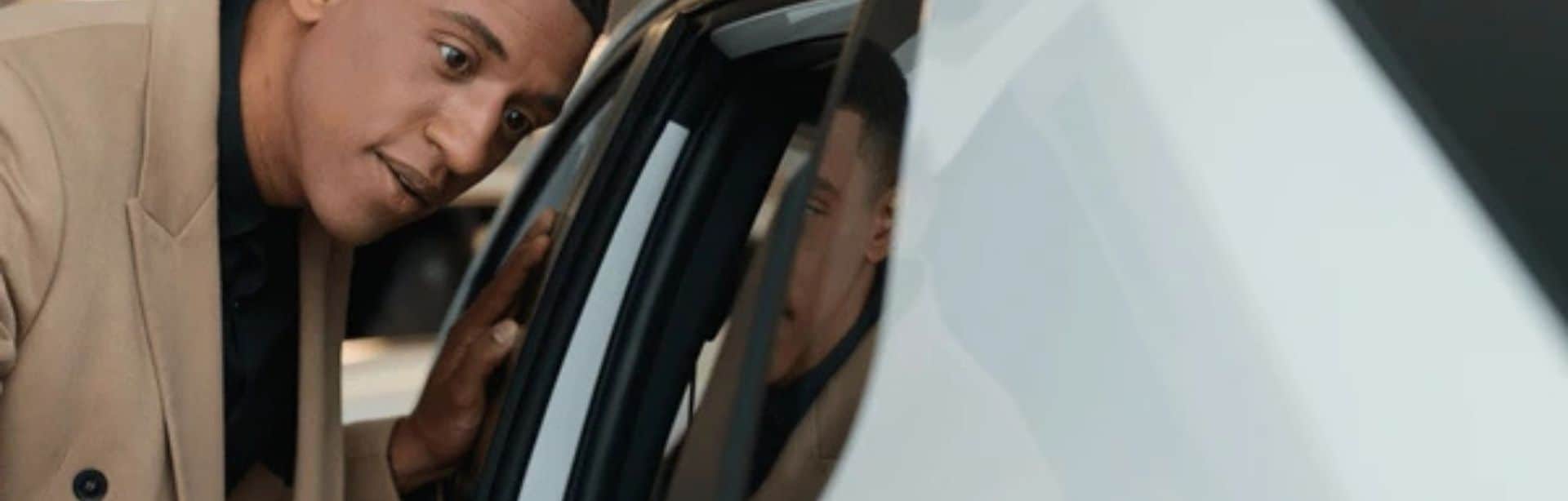
One of the biggest questions we get is whether a driver should trade their car in or try to sell it themselves. It is a valid question. Usually, selling a car privately on your own can net you a slightly higher sale price. However, when you look at the full picture, especially in North Carolina, the math often favors the trade-in.
The Tax Savings Factor
This is the secret weapon of the trade-in. In North Carolina, when you buy a vehicle, you pay Highway Use Tax (HUT). However, if you trade in a vehicle, you only pay tax on the difference in price.
Here is a simple example to show how it works. Let’s say you want to buy a new 2026 Subaru that costs $35,000. You have a trade-in worth $20,000.
- Without a trade: You pay tax on the full $35,000.
- With a trade: You only pay tax on the remaining $15,000 balance.
This tax credit stays in your pocket immediately. If you sell your car privately, you get zero tax credit when you buy your new car. You have to sell your car for significantly more money privately just to break even with the tax savings you get at the dealership.
Safety and Convenience in the Triangle
Selling a car privately means listing it online and meeting strangers. Do you really want people coming to your home in Holly Springs or meeting you in a parking lot in Knightdale at night? It can be uncomfortable and risky. Plus, you have to deal with test drives, tire kickers, and people who do not have the money they promised.
Trading in at a dealership like ours removes that stress. You drop off your old car and drive away in your new one. We handle the title transfer, the loan payoff, and the DMV paperwork. Your time has value, and skipping the headache of a private sale is worth a lot to many drivers.
Preparing Your Subaru for the Appraisal
You would not go to a job interview in sweatpants. You should not bring your car to an appraisal filled with fast-food wrappers and dog hair. Spending a Saturday morning getting your car ready can put real money in your pocket.
Battling the "Pollening" and Red Clay
If you have lived in Raleigh for more than a year, you know about the pollen. For a few weeks in spring, everything turns yellow. Even if it isn't pollen season, that yellow dust hides in cracks and crevices. A standard car wash might miss it. Open your hood and trunk and wipe down the jambs.
Also, look at your floor mats. North Carolina red clay is notorious for staining carpets. If you enjoy hiking at Eno River State Park, you probably have some clay on your mats. Scrub them well. If the mats are in terrible shape, consider buying a cheap set of generic rubber mats to make the interior look cleaner. A clean car tells the appraiser that you took care of the machine, not just the paint.
Gather Your "Resume"
Your car has a history, and you need to prove it was a good one. Gather all your maintenance records. Did you get your oil changed every 6,000 miles? Did you replace the timing belt on schedule? Having a folder of receipts from reputable local shops shows that the car is mechanically sound.
If you have the original window sticker, bring it. If you have both sets of keys, bring them. Replacing a modern car key fob can cost hundreds of dollars. If you show up with only one key, the dealer has to deduct that cost from your offer. Showing up with both keys removes that deduction instantly.
Mechanical Checks: What Matters?
You do not need to rebuild the engine before you trade in your car. However, small fixes can stop a dealer from lowering their offer.
Warning Lights
If your "Check Engine" light is on, get it checked. Sometimes it is just a loose gas cap or a minor sensor. If you trade it in with the light on, the dealer has to assume the worst-case scenario to protect themselves. They might deduct $1,000 for a repair that would have cost you $100.
Tires and Brakes
Take a penny and stick it into your tire tread. If you can see all of Lincoln's head, your tires are bald. Dealers look at tires immediately. If the car needs four new tires, that is a big expense they have to deduct. You do not necessarily need to buy brand new premium tires, but be aware that bald tires will lower your value.
Listen to your brakes on your commute down Capital Boulevard. If they squeak or grind, that is another deduction. Being up front about these issues is better than hoping the appraiser misses them—because they won't.
Timing Your Trade-In in Wake County
Is there a "best time" to trade in a car? In the Triangle, seasonality can play a role.
The Academic Calendar
Our area is dominated by universities: NC State, Duke, UNC, and others. In late summer (July and August), thousands of students and parents are looking for reliable transportation. The demand for safe, used SUVs and sedans spikes. Trading in your car right before the school semester starts can sometimes net you a better offer because dealers are desperate for inventory to sell to students.
End of the Month
The old wisdom about buying a car at the end of the month also applies to trading one in. Dealers have quotas to hit. If they are close to a goal, they might be willing to pay a little more for your trade just to make the deal happen and get a new car sold.
Model Year Changeover
New models, like the 2026 lineup, typically start arriving in late summer or fall. When the new models hit the lot, the value of older models can dip slightly. It is often smart to trade in your vehicle before the market is flooded with the newest version of your car.
The Art of Negotiation
Once you are ready to make the deal, you need a strategy. You have done your research, cleaned your car, and picked your timing. Now, how do you handle the conversation?
Separate the Transactions
This is the most important rule. Negotiate the price of the new car first. Get that number in writing. Only after you have agreed on the price of the new Subaru should you discuss the trade-in.
If you mix them together, it gets confusing. A dealer might show you a high price for your trade-in but then charge you full price for the new car. Or they might give you a big discount on the new car but lowball your trade. Keep them separate to ensure you are winning on both fronts.
Bring Your Backup
If you visited other dealerships or got an instant cash offer from a website, bring those offers with you. Physical proof is powerful. You can say, "I really want to buy from you because you are local, but this other place offered me $500 more for my trade. Can you match it?"
Most of the time, a local dealer wants your business and wants your car for their lot. They will try their hardest to meet a reasonable, written offer from a competitor.
Be Realistic but Firm
Remember the difference between retail and trade-in value. Do not demand the retail price you saw on a website. However, do not be afraid to push for the upper end of the trade-in range if your car is in great condition. If you have kept it garaged in Cary and serviced it perfectly, it is worth more than a neglected car. Stand by the quality of your vehicle.
Why Subaru Service History is Gold
One specific thing to remember about our brand is the engine. The Subaru BOXER engine is unique. It requires specific care. Buyers know this. When you trade in a Subaru, having proof that it was serviced by certified technicians who understand the BOXER engine adds value.
If you have done your service at a dealership or a specialist shop in the Triangle, highlight that. It proves that the fluids used were correct and the parts were genuine. This "pedigree" makes your car easier for the dealer to resell as a Certified Pre-Owned vehicle, which means they can pay you more for it.
Avoiding Common Pitfalls
There are a few mistakes that can cost you money.
- Fixing major body damage: If your car has a huge dent in the door, do not pay a body shop $2,000 to fix it before trading it in. You rarely get that money back dollar-for-dollar. The dealership can fix it cheaper than you can. Let them handle the big stuff.
- Hiding issues: If the air conditioning only works on Tuesdays, tell the appraiser. If they find it later (and they will), it breaks trust. If you are honest, they can accurately estimate the repair cost.
- Forgetting accessories: Did you take the cargo cover out to move a bookshelf? Put it back. Did you take the headrests off the back seats? Put them back. Missing parts are annoying and costly to replace.
Finalizing the Deal
When you shake hands on a deal in North Carolina, the paperwork moves fast. You will need your title. If there is a lien on the car (you still owe money), you need the bank’s info. The dealership will call the bank to get a "payoff quote."
If you owe more than the car is worth, this is called "negative equity." You can usually roll this amount into your new loan, but be careful. It increases your monthly payment. If your car is worth more than you owe, that "positive equity" acts as a down payment on your new 2026 Subaru.
Make sure you remove all your personal data. Clear your home address from the GPS. Unpair your phone from the Bluetooth. Take your E-ZPass or toll transponder off the windshield. Check the CD player (if you still have one!) and the sunglasses holder. Once you sign the papers, the car belongs to the dealer.
Summary
Trading in your Subaru in the Raleigh area does not have to be a mystery. It is a business transaction where preparation pays off. By understanding the local love for the Subaru brand, leveraging the NC tax laws, and presenting a clean, well-documented vehicle, you can maximize your return.
We hope this guide helps you feel empowered. Whether you are upgrading to a spacious Ascent for family road trips or a sporty WRX for fun on the back roads of Durham, getting top dollar for your trade puts you in the driver's seat.
Frequently Asked Questions (FAQs)
What documents do I need to trade in my car in Raleigh?
To trade in your vehicle in North Carolina, you must bring your valid driver's license and the vehicle's current registration. If you own the car outright, you must bring the physical title (often called the "pink slip"). If you still have a loan on the vehicle, bring your lender's account information and the most recent payoff statement so the dealership can handle the transfer.
Does the condition of my tires really affect my trade-in offer?
Yes, the condition of your tires is a major factor in the appraisal process. If your tires are bald or have uneven wear from the potholes on I-40, the dealership will have to replace them before selling the car to the next owner. They will deduct the cost of new tires and labor from your trade-in offer, so having decent tread can protect your value.
Can I trade in a car that is not a Subaru at a Subaru dealership?
Absolutely, you can trade in any make or model of vehicle at our dealership. While we specialize in Subaru, we accept trades from all manufacturers, including trucks, sedans, and SUVs. We accept these vehicles to add to our diverse pre-owned inventory that serves drivers across Cary, Apex, and the entire Triangle region.
How does the North Carolina Highway Use Tax credit work?
When you trade in a vehicle in NC, you only pay the 3% Highway Use Tax on the difference between the new car's price and your trade-in's value. For example, if the new car is $30,000 and your trade-in is $10,000, you are only taxed on the remaining $20,000. This can save you hundreds of dollars compared to selling your car privately and buying a new one separately.
About Johnson Subaru of Cary
As a family-owned and minority-owned business, Johnson Subaru of Cary has been dedicated to serving our community with pride since 2008. We are honored to have earned multiple awards for customer satisfaction from Cars.com, DealerRater, Edmunds, and Carfax, reflecting our team's commitment to excellence. Our dealership is recognized as the #1 Volume Subaru Dealership in the Southern Region, a testament to the trust our customers place in us. We are also deeply involved in our community, supporting local partners like the Marbles Kids Museum and Second Chance Pet Adoptions. We invite you to experience our award-winning service and discover why so many drivers choose our trusted team for their automotive needs.